How to Check Tire Tread Depth
Tread depth decides how well a tire grips on wet roads. Here are four ways to measure it, what the numbers mean and how uneven wear points to other problems.
· 4 min read
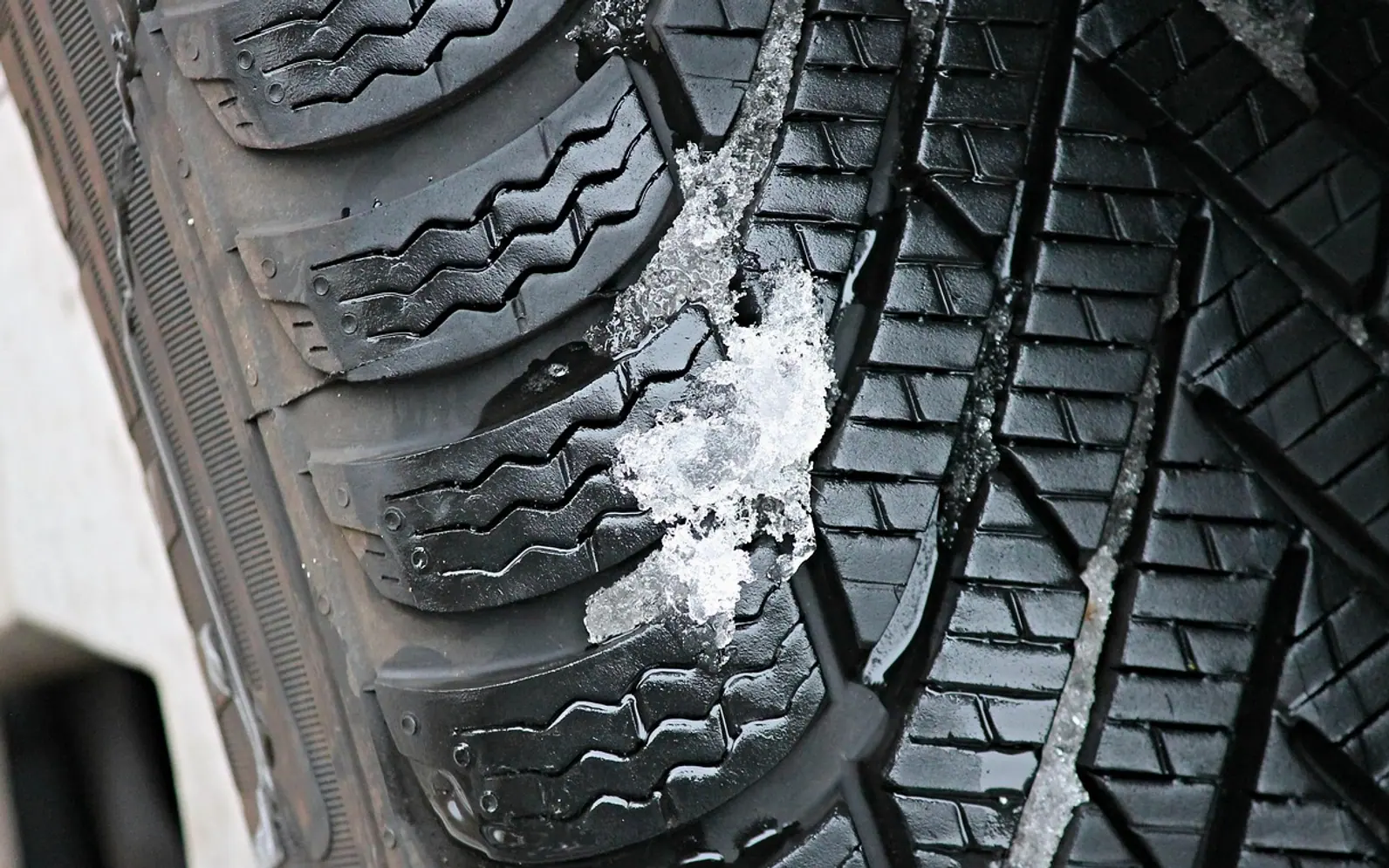
The quickest way to check tire tread is the penny test: slide a penny into a tread groove with Lincoln's head pointing down. If you can see the whole of his head, the tread is worn to about 2/32 of an inch or less and the tire should be replaced. A quarter used the same way, with Washington's head pointing down, shows when you have reached roughly 4/32 of an inch, which is an early signal to start planning new tires.
Tread depth matters most on wet roads. The grooves channel water out from under the tire so the rubber stays in contact with the surface, and shallow grooves cannot clear water as well, which raises the risk of hydroplaning and lengthens stopping distances.
Four ways to measure tread depth
1. The penny test
- Hold a penny with Lincoln's head upside down and facing you.
- Insert it into one of the main circumferential grooves.
- If the top of his head stays hidden, there is more than about 2/32 of an inch of tread at that spot. If you can see all of it, the tire is at or near the end of its life.
2. The quarter test
Same method, using Washington's head on a quarter. If the top of his head is visible, the tread is at about 4/32 of an inch or less. Many tire and safety organizations suggest considering replacement around this point if you regularly drive in rain or snow.
3. Tread wear indicator bars
Molded into the main grooves of most tires are small raised bars of rubber, often marked by a triangle or the letters TWI on the shoulder. When the surrounding tread wears down level with these bars, the tire has reached about 2/32 of an inch.
4. A tread depth gauge
An inexpensive gauge gives an actual figure. Push the probe into a groove, press the base flat against the tread blocks and read the scale. A gauge is the most accurate option and makes it easy to track wear over months.
What the readings mean
| Tread depth | What it suggests |
|---|---|
| Around 10/32 to 11/32 in. | Typical of many new passenger car tires; winter and light-truck tires often start deeper. |
| 6/32 in. and above | Plenty of tread for most conditions; keep checking monthly. |
| About 4/32 in. | Wet and snowy grip falls off noticeably; start shopping for replacements. |
| About 2/32 in. or less | Replace the tire. This is the legal minimum in many US states. |
Legal minimums differ by place. Many US states use 2/32 of an inch, while the UK and much of Europe set a minimum of 1.6 mm across the central part of the tread. Check the rules where you drive, and treat the legal figure as a floor rather than a target.
Measure in more than one place
Tires rarely wear perfectly evenly. Check each tire at three points across its width (inner edge, center and outer edge) and at a few spots around the circumference. Use the lowest reading. The pattern of wear often tells a story:
- Center worn more than the edges: often a sign of running the tires overinflated.
- Both edges worn more than the center: often a sign of underinflation. The guide on how to check tire pressure shows how to find and set the right figure.
- One edge worn faster: frequently linked to wheel alignment.
- Scalloped or cupped patches: may point to worn suspension parts or balance problems.
Uneven wear is worth a visit to a tire shop or mechanic, because fixing the cause protects the next set too.
Common mistakes
- Checking only one tire. Front and rear tires often wear at different rates, especially on front-wheel-drive cars.
- Measuring on a tread block's raised edge rather than in the main groove.
- Ignoring the inner edge. It is the hardest part to see and sometimes the most worn. Turning the steering wheel to full lock makes the front tires' inner shoulders easier to reach.
- Relying on tread alone. A tire with deep grooves can still be unsafe if it is old, cracked or bulging. Our guide on how long tires last explains how to read a tire's age.
Questions drivers often ask
How often should I check tread depth?
Once a month alongside a pressure check is a good rhythm, plus before long trips and at the start of winter.
Do I need to replace all four tires at once?
Not always. Many drivers replace tires in pairs on the same axle. Some all-wheel-drive vehicles are sensitive to differences in tread depth between tires, so the owner's manual or a tire professional should guide that decision.
Does tread type matter as much as depth?
Both matter. A winter tire with half its tread left grips snow very differently from a summer tire at the same depth. For a refresher on how tire types differ, see the guide to choosing tyres for every season.
Odd jobs
Quick wins around the house and the drive
Little jobs that save a headache later on.
Date your money check
Write the date on every net worth or budget sheet so next year's version compares fairly.
Keep a gauge in the glovebox
A personal tire gauge costs little and is often steadier than a forecourt one.
Restart before you ring
Many picture freezes clear once the router and the box have been switched off and on again.
Read the door placard
Your car's correct tire pressures come from the maker, not from the sidewall.
Desk rules
Rules of thumb behind our checks
A few principles that shape what reaches the page.
A vehicle handbook outranks any general car guide, ours included.
Credit scoring differs between countries and between agencies, so no single score explains every file.
Book values on a balance sheet can sit a long way from what an asset would actually sell for.
Apps and set-top boxes rearrange their menus often, which makes the provider's own help pages the freshest source.
A figure that depends on your lender, your car or your country is better looked up at the source than copied from an article.