How to Read an Oil Dipstick
Checking engine oil takes two minutes and a paper towel. Here is how to get an accurate reading, what the marks and colors mean and how to top up with the right oil.
· 4 min read
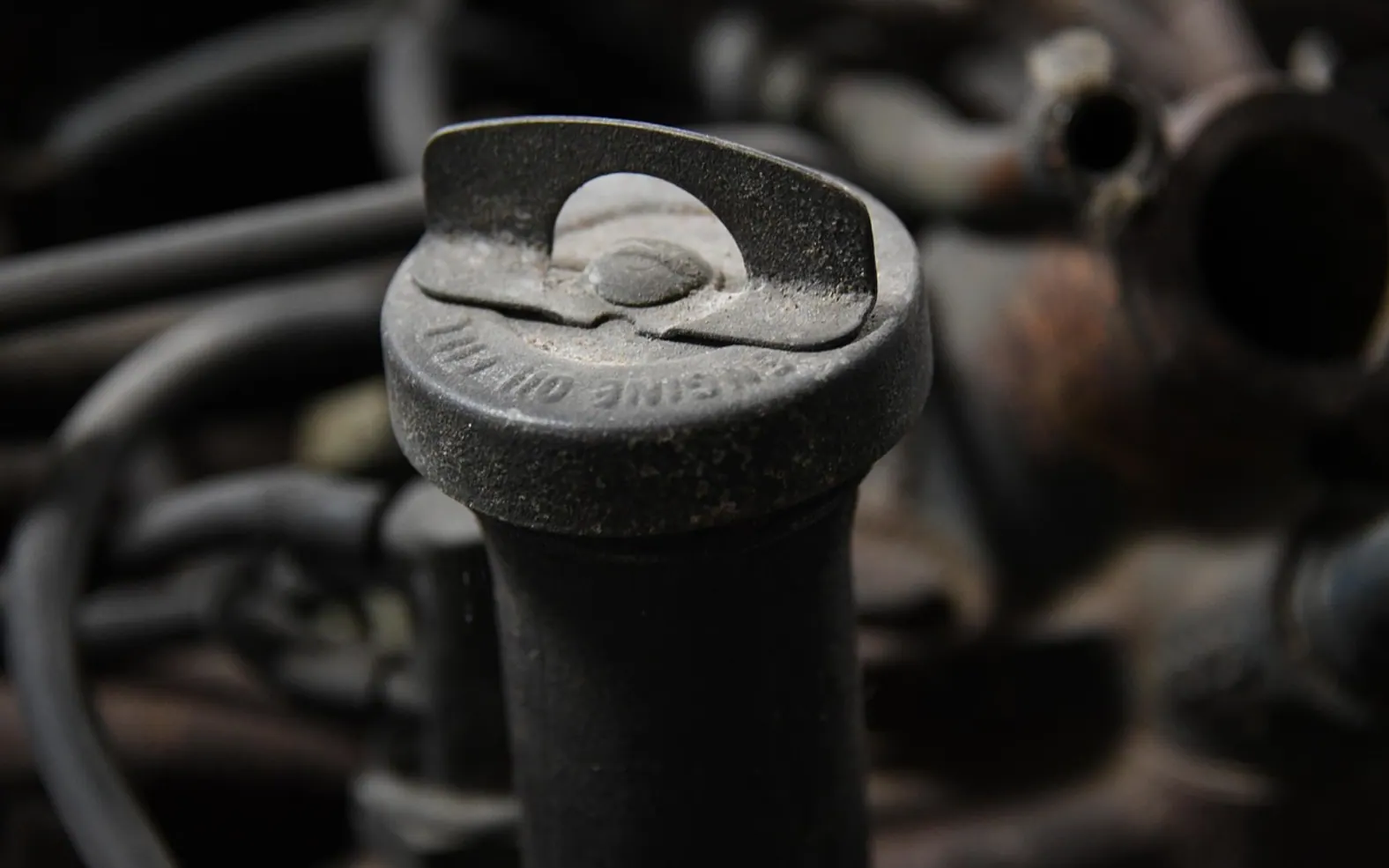
To read an oil dipstick, park on level ground, switch the engine off and wait a few minutes, then pull the dipstick out, wipe it clean, push it fully back in and pull it out again. The oil film should end between the two marks near the tip. Close to the upper mark is full; at or below the lower mark means the engine needs oil soon.
That is the short version. The details below help you get a reading you can trust and decide what to do with it.
Before you start
- Level ground. A car parked on a slope tilts the oil in the sump and gives a false reading.
- Engine off and settled. Oil needs time to drain back down after the engine stops. Some manufacturers say to check with the engine warm after a short wait, others prefer it cold. The owner's manual says which.
- A clean, lint-free cloth or paper towel, plus gloves if you prefer to keep your hands clean.
- Care around hot parts. The exhaust manifold and radiator area stay hot for some time after a drive.
Step by step: how to check the oil in your car
- Open the hood and find the dipstick. It usually has a brightly colored loop or handle, often yellow or orange, and may carry an oil-can symbol.
- Pull it out completely and wipe the whole length clean.
- Push it back in until it seats fully. A dipstick that is not pushed all the way home reads low.
- Pull it out again and hold it horizontally so the oil does not run up or down the stick.
- Note where the oil film stops in relation to the marks.
- Return the dipstick fully to its tube before closing the hood.
How to read the marks
Dipsticks use different markings, but they all show a safe range:
- two small holes or notches;
- the letters L and H, or MIN and MAX;
- a crosshatched or textured band between two lines.
Anywhere inside that range is acceptable. On many engines the gap between the lower and upper marks equals roughly one quart, or about a liter, but this varies, so check the manual before pouring.
If the reading is unclear, wipe and repeat. Streaky marks are common, and the lowest consistent line on both sides of the stick is the one to trust.
What color should engine oil be?
| What you see | What it usually means |
|---|---|
| Clear amber or honey color | Fresh oil in good condition. |
| Dark brown or black | Normal with use, especially in diesels; check the service schedule rather than judging by color alone. |
| Milky, light brown or frothy | Possible coolant or water contamination; have it inspected promptly. |
| Gritty, with visible particles | Dirt or debris in the oil; worth a professional look. |
| Strong burnt smell | Overheating or very old oil; book a check. |
Color is only a clue. Oil can turn dark within a few hundred miles and still be doing its job. The interval in the manual remains the main guide, and our article on how often to change your oil covers how that interval is set.
What type of oil does my car take?
Before topping up, find the exact specification. It appears in a few places:
- the owner's manual, usually in the maintenance or capacities section;
- the oil filler cap on top of the engine, which often shows the viscosity grade;
- a service record from the last oil change.
The viscosity grade looks like 5W-30 or 0W-20. The first number, with the W for winter, describes how easily the oil flows when cold; the second describes its thickness at operating temperature. Many manufacturers also require a particular approval or standard, printed on the bottle. Matching both the grade and the approval matters more than the brand.
Topping up without overfilling
- Remove the filler cap, not the dipstick tube, unless the manual says otherwise.
- Pour a small amount using a funnel, then wait a minute for it to drain down.
- Check the dipstick again and repeat in small steps until the level sits in the safe range.
- Refit the cap firmly and wipe up any spills on the engine.
Going above the upper mark is not "extra protection". Too much oil can be whipped into foam by moving engine parts and may put pressure on seals, so stop as soon as the level is within range.
Cars without a dipstick
A growing number of cars have no traditional dipstick and use an electronic sensor instead. The level is shown in the instrument cluster or infotainment menu, usually after the engine has been off for a set time. The manual explains how to bring up the reading.
How often to check
Once a month, and before any long trip, is a sensible routine for most drivers. It pairs well with the other quick monthly job, checking tire pressure. Check more often if the car is older or you have noticed the level dropping.
If the oil pressure warning symbol lights up while driving, that is a different situation from a slightly low dipstick reading. The guide to car dashboard lights explains what to do.
Odd jobs
Quick wins around the house and the drive
Little jobs that save a headache later on.
Date your money check
Write the date on every net worth or budget sheet so next year's version compares fairly.
Keep a gauge in the glovebox
A personal tire gauge costs little and is often steadier than a forecourt one.
Restart before you ring
Many picture freezes clear once the router and the box have been switched off and on again.
Read the door placard
Your car's correct tire pressures come from the maker, not from the sidewall.
Desk rules
Rules of thumb behind our checks
A few principles that shape what reaches the page.
A vehicle handbook outranks any general car guide, ours included.
Credit scoring differs between countries and between agencies, so no single score explains every file.
Book values on a balance sheet can sit a long way from what an asset would actually sell for.
Apps and set-top boxes rearrange their menus often, which makes the provider's own help pages the freshest source.
A figure that depends on your lender, your car or your country is better looked up at the source than copied from an article.