How to Jump-Start a Car Safely
A flat battery is a common morning setback. Here is how to jump-start a car with cables or a booster pack, in the right order and with the right precautions.
· 4 min read
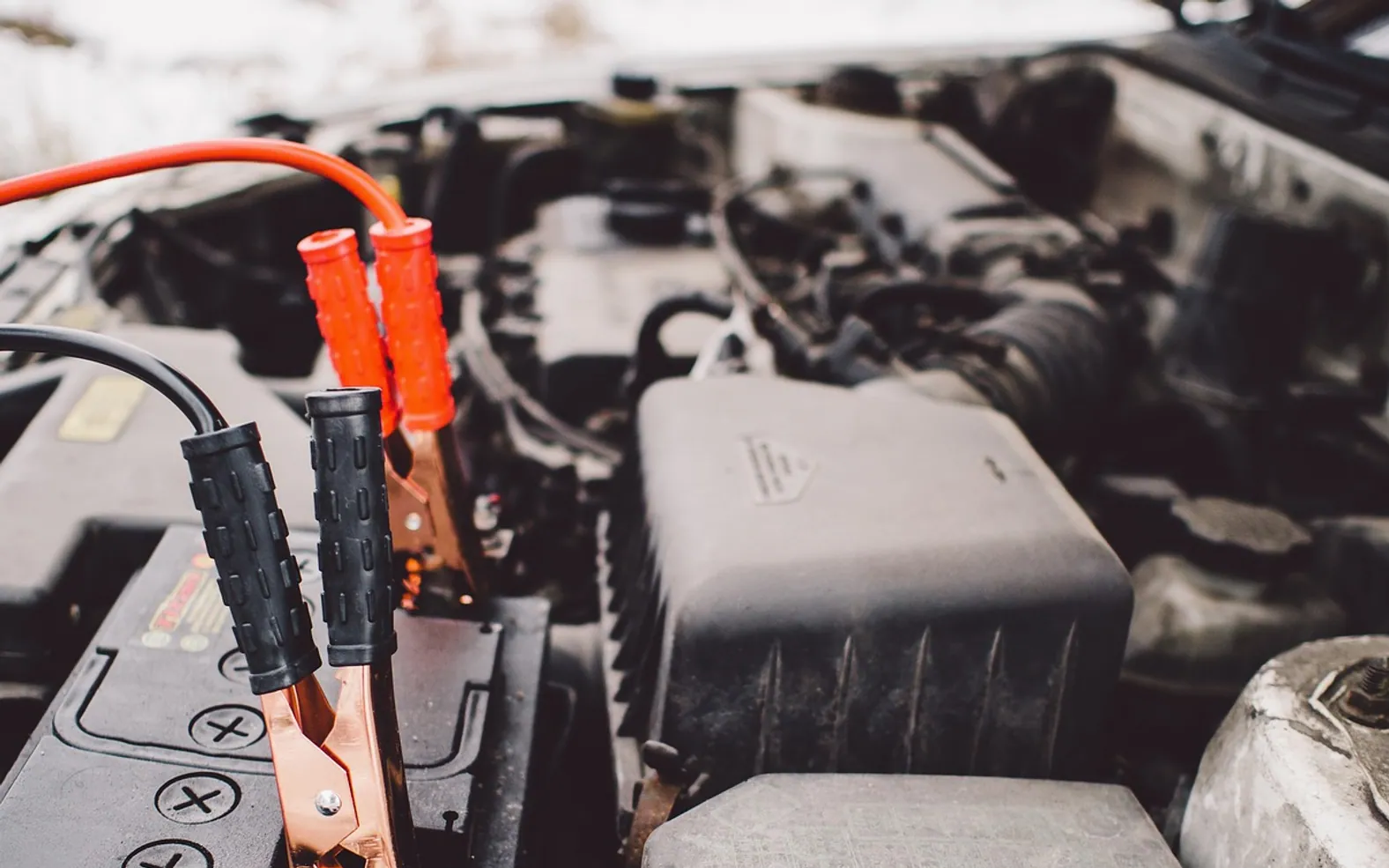
A car that answers the key with a click, a weak whirr or nothing at all very often has a flat battery. Lights left on, a long spell parked, cold weather or simply an ageing battery can all leave it without enough charge to turn the engine. A jump-start borrows power from another source to get things going. Done carefully it is straightforward; done carelessly it can damage electronics or injure someone.
Before you start, open the owner's handbook. Many cars have specific jump points under the bonnet, and some hybrids and electric vehicles have their own procedure or should not be used to jump other cars at all. The handbook's instructions take priority over any general guide, including this one.
What you need
- Jumper cables long enough to reach between the two cars, with clamps in good condition, or a charged portable booster pack.
- A donor car with a healthy battery of the same voltage, if you are using cables.
- Gloves and eye protection if you have them, and a torch if it is dark.
Safety checks first
Look at the flat battery before you connect anything. Do not attempt a jump-start if the battery case is cracked, swollen or leaking, if you can smell a strong rotten-egg odour, or if the battery may be frozen. Batteries can give off flammable gas, so keep flames and cigarettes well away and avoid creating sparks near the battery.
- Park the donor car close but make sure the two vehicles do not touch.
- Switch off both ignitions, lights, heaters and other accessories.
- Apply both handbrakes and put each car in park or neutral.
- Remove dangling scarves, jewellery and loose sleeves near the engine bay.
- If you are at the roadside, switch on hazard lights and keep everyone out of the path of traffic.
Connecting jumper cables in the right order
Identify the terminals on each battery: positive is usually marked + and often has a red cover; negative is marked −. Then connect in this sequence:
- Red clamp to the positive terminal of the flat battery.
- The other red clamp to the positive terminal of the donor battery.
- Black clamp to the negative terminal of the donor battery.
- The final black clamp to a bare, unpainted metal point on the engine or body of the car with the flat battery, away from the battery itself and from moving parts. Many cars have a marked earth point for this.
That last connection is made away from the battery because a small spark is normal when the circuit completes, and you want it nowhere near any gas the battery may release. Keep the red and black clamps from touching each other at any point while the cables are connected.
Starting the car
- Start the donor car and let it run for a few minutes.
- Try to start the car with the flat battery. If it does not start, wait a few minutes and try again rather than cranking continuously.
- Once it runs, leave both engines running briefly before disconnecting.
If the engine still refuses after a few attempts, stop. The fault may be the starter, the connections or something other than the battery, and repeated attempts can overheat cables or components.
Disconnecting safely
Remove the clamps in exactly the reverse order: black from the earth point, black from the donor battery, red from the donor battery, then red from the formerly flat battery. Hold each clamp by its insulated handle and keep it clear of metal until it is stowed.
Using a portable booster pack
Booster packs remove the need for a second car. Make sure the pack is charged and switched off, then connect red to the positive terminal and black to the earth point or terminal the pack's instructions specify. Switch the pack on, start the car, then switch off and disconnect in reverse. Follow the manufacturer's directions closely, as features differ between models.
After the jump
Keep the engine running and, if you can, take a drive of a reasonable length so the alternator can put some charge back into the battery. Short hops may not be enough. If the car needs another jump soon afterwards, have the battery and charging system tested at a garage; a battery that keeps going flat may be near the end of its life or there may be a fault drawing power while the car is parked.
A rough idle or a shudder when a car first starts can have several causes; our article on why a car trembles on ignition looks at the usual suspects.
When to call for help instead
- The battery is damaged, leaking or frozen.
- You are unsure which terminal is which or cannot find a safe earth point.
- The car is a hybrid or electric vehicle and the handbook advises against a standard jump.
- You are on a busy road without a safe place to work.
Roadside assistance services deal with flat batteries every day, and calling one is a sensible choice whenever something feels wrong. Once the car is running again, it is also a good moment to check the tire pressure before a longer drive.
Odd jobs
Quick wins around the house and the drive
Little jobs that save a headache later on.
Date your money check
Write the date on every net worth or budget sheet so next year's version compares fairly.
Keep a gauge in the glovebox
A personal tire gauge costs little and is often steadier than a forecourt one.
Restart before you ring
Many picture freezes clear once the router and the box have been switched off and on again.
Read the door placard
Your car's correct tire pressures come from the maker, not from the sidewall.
Desk rules
Rules of thumb behind our checks
A few principles that shape what reaches the page.
A vehicle handbook outranks any general car guide, ours included.
Credit scoring differs between countries and between agencies, so no single score explains every file.
Book values on a balance sheet can sit a long way from what an asset would actually sell for.
Apps and set-top boxes rearrange their menus often, which makes the provider's own help pages the freshest source.
A figure that depends on your lender, your car or your country is better looked up at the source than copied from an article.