How Long Do Car Batteries Last?
Most car batteries give a few years of service, but heat, short trips and idle weeks change the picture. Here is how to judge yours and when to replace it.
· 5 min read
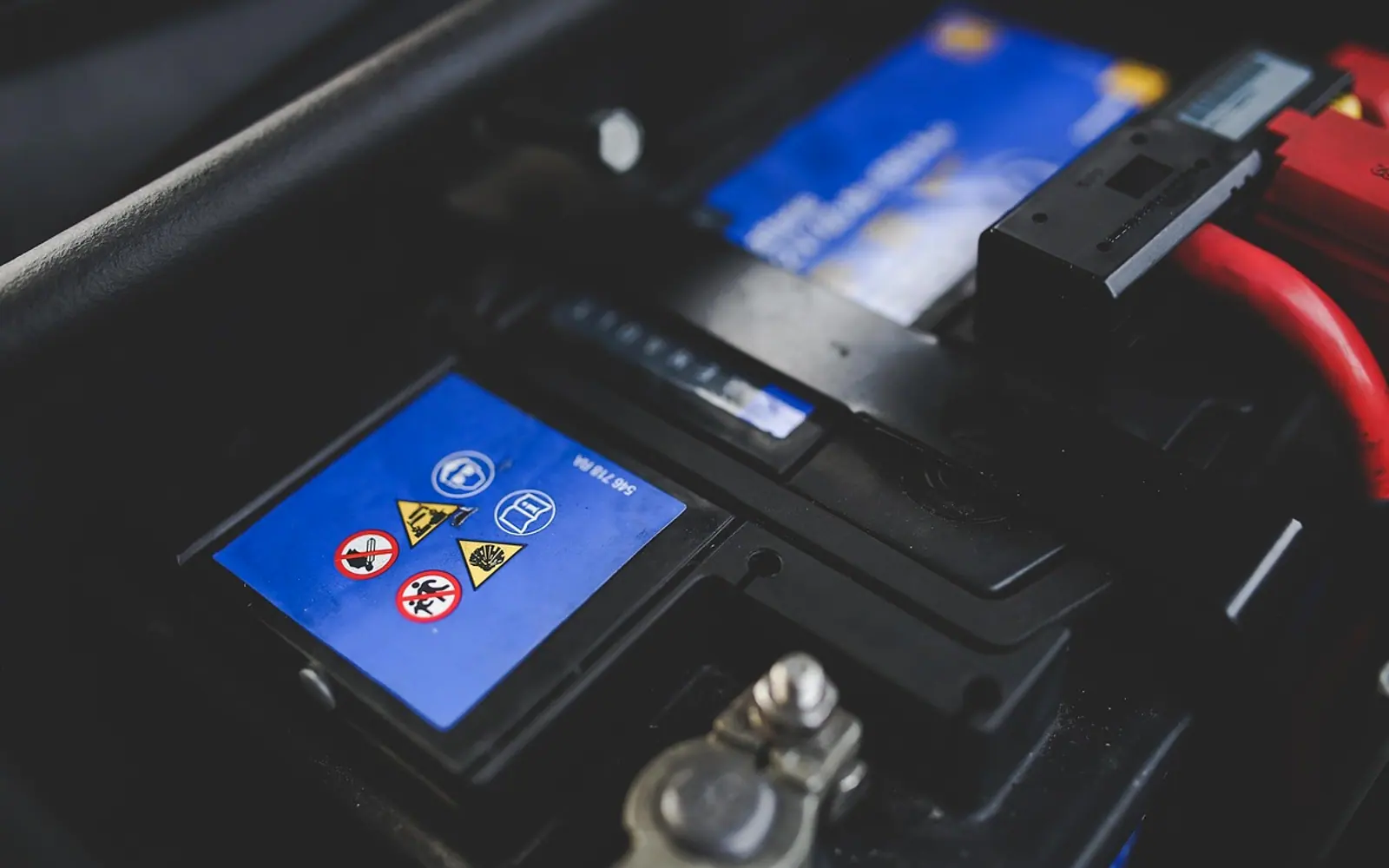
A conventional 12-volt car battery usually lasts somewhere around three to five years, and that commonly quoted range is only a rough guide. Some fail well before their third winter; others keep going far longer. The real answer for any one car depends on climate, driving habits, the type of battery and how much electrical equipment the car runs while parked.
This guide explains what wears a battery out, how to spot the early warning signs, how to test one and when replacement makes more sense than another recharge.
What decides a battery's lifespan
A lead-acid battery stores energy through a chemical reaction between lead plates and an acid electrolyte. Every charge and discharge cycle wears the plates a little, and certain conditions speed that wear up.
- Heat. High under-hood temperatures speed up the chemical breakdown inside the battery and evaporate electrolyte. Batteries in hot regions often have shorter lives than those in mild ones, even though the failure tends to show up on the first cold morning.
- Short trips. Starting an engine takes a big gulp of energy. A five-minute drive rarely gives the alternator time to put it all back, so a car used only for short errands can sit in a permanently undercharged state.
- Long idle spells. Clocks, alarms, keyless entry and connected services draw a small current around the clock. Weeks without driving can drain a battery deeply, and repeated deep drains shorten its life.
- Vibration and loose mounting. A battery that is not clamped firmly can suffer internal damage over time.
- Corrosion. White or greenish deposits on the terminals add resistance and make the battery work harder to deliver current.
Battery types and what they mean for life expectancy
| Type | Where you find it | Points to know |
|---|---|---|
| Flooded lead-acid | Many older and simpler cars | The traditional design; some versions allow the electrolyte level to be checked. |
| EFB (enhanced flooded) | Entry-level start-stop cars | Built to cope with more frequent restarts than a standard flooded battery. |
| AGM (absorbent glass mat) | Start-stop systems and cars with heavy electrical loads | Sealed and spill-resistant; must be replaced with the same type. |
| 12-volt auxiliary in hybrids and EVs | Hybrid and electric vehicles | Powers the electronics and wakes the car; it can still go flat and needs replacing over time. |
Fitting a cheaper type than the car was designed for can shorten the replacement's life and upset start-stop systems, so match what the handbook specifies.
Signs of a bad car battery
Batteries rarely fail without some hint beforehand. Watch for these:
- The engine turns over slowly or sounds labored, especially on cold mornings.
- A clicking sound when you turn the key or press the start button.
- Headlights or interior lights dim noticeably while the engine cranks.
- The battery or charging light appears on the dashboard. Our guide to what the dashboard warning lights mean explains how this one differs from the others.
- The start-stop system stops switching the engine off, which some cars do to protect a weak battery.
- A swollen or cracked case, or a rotten-egg smell near the battery. Both call for professional attention rather than further use.
A rough, shaky start can also be battery related, though misfires and idle problems have other causes too. The guide on why a car trembles when it first starts walks through the usual suspects.
How to test a car battery at home
A basic digital multimeter gives a useful first reading.
- Let the car sit for a few hours with everything switched off so the reading is not distorted by recent charging.
- Set the meter to DC volts and touch the red probe to the positive terminal and the black probe to the negative.
- A healthy, fully charged battery at rest reads a little above 12.6 volts. Readings noticeably lower point to a battery that is partly discharged or losing capacity.
- With the engine running, the reading should rise to somewhere around 14 volts. If it barely moves, the charging system may be the problem rather than the battery.
Voltage alone cannot prove a battery is healthy, because a worn battery can show a decent resting figure and still collapse under load. Many auto parts stores and workshops run a load or conductance test that gives a clearer verdict, and some do it free of charge.
When to replace a car battery
Replacement is usually the sensible call when:
- the battery has needed a jump more than once in a short period with no obvious cause such as lights left on;
- a load test shows it can no longer deliver its rated cranking current;
- it is approaching or past the age range above and the car is about to face a hard winter or a long trip;
- the case is damaged, leaking or bulging.
Most batteries carry a date sticker or stamped code showing when they were made or fitted, which helps when you are unsure of the age. If it goes flat before you get to a replacement, the steps in how to jump-start a car safely will get you moving again.
Habits that help a battery last longer
- Combine short errands into one longer drive where you can.
- Use a smart maintainer charger if the car will be parked for several weeks.
- Keep terminals clean and tight, and the battery clamped firmly in its tray.
- Switch off lights, heated seats and other accessories before turning the engine off.
- Park in shade or a garage during hot spells when that is practical.
Common questions
Can a dead battery be recharged and reused?
Often, yes, if it went flat because of a one-off drain. A battery that has been fully drained several times, or left flat for a long period, may never hold a full charge again.
Does replacing the battery reset anything on the car?
It can. Radios, clocks and window settings may need resetting, and some modern cars need the new battery registered with the car's electronics so it is charged correctly. The handbook or a workshop can confirm.
What happens to the old battery?
Lead-acid batteries contain materials that should never go in household waste. Retailers that sell batteries commonly accept old ones for recycling.
Batteries hold acid and can release flammable gas. Wear eye protection, avoid sparks and leave anything beyond a simple check to a qualified technician if you are unsure.
Odd jobs
Quick wins around the house and the drive
Little jobs that save a headache later on.
Date your money check
Write the date on every net worth or budget sheet so next year's version compares fairly.
Keep a gauge in the glovebox
A personal tire gauge costs little and is often steadier than a forecourt one.
Restart before you ring
Many picture freezes clear once the router and the box have been switched off and on again.
Read the door placard
Your car's correct tire pressures come from the maker, not from the sidewall.
Desk rules
Rules of thumb behind our checks
A few principles that shape what reaches the page.
A vehicle handbook outranks any general car guide, ours included.
Credit scoring differs between countries and between agencies, so no single score explains every file.
Book values on a balance sheet can sit a long way from what an asset would actually sell for.
Apps and set-top boxes rearrange their menus often, which makes the provider's own help pages the freshest source.
A figure that depends on your lender, your car or your country is better looked up at the source than copied from an article.